According to Gardener’s World, April is the ideal time to take cuttings from your established herbaceous perennials, to boost your stock of plants like asters, phlox and dahlias.
Perennial plants that die back to a crown over winter will throw up new shoots in the spring. These shoots are almost perfect for cuttings as they are growing rapidly and given the right conditions will happily develop roots quickly.
During April, the strong basal shoots of herbaceous perennials make easy, quick-rooting cuttings. The tall forms of phlox are ideal candidates, and gardeners have long propagated them in this way to share with friends and neighbours. From July, you’ll see many gardens awash with their pink, purple and white flowers, and their perfume fills the evening air.
By taking your own basal cuttings, you can make lots of new plants, which gives you plenty of scope to try out different planting ideas. And you can use this technique on all manner of beautiful border perennials.
You Will Need
- A sharp knife
- A dibber or chopstick
- Sharp grit
- Clear plastic bag
Step 1
Select a plant with plenty of strong basal shoots, 10-12cm long, and choose three or four for your cuttings. Make a clean cut, severing the shoot as near to the base as possible.
Step 2
Neaten the cut if necessary, then use a sharp knife to remove any basal leaves that may end up under the compost surface. Pinch out the top with your nails.
Step 3
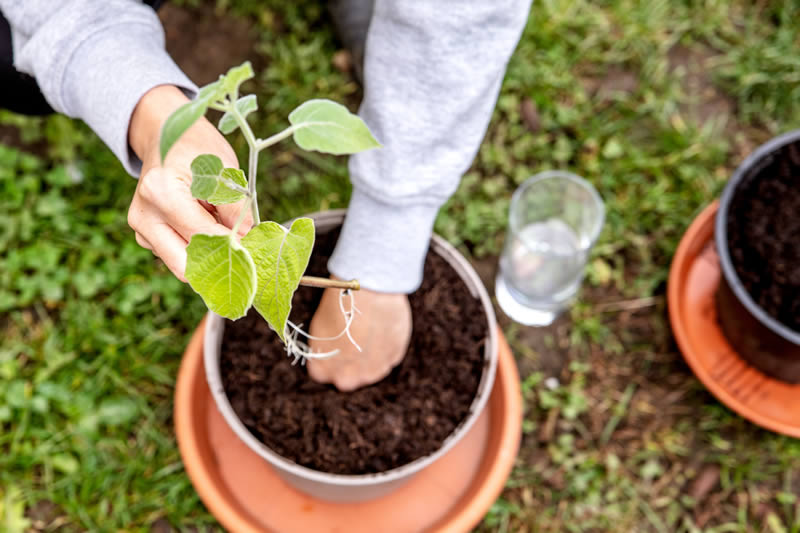
Use a dibber or chopstick to ease the cuttings into the compost, sinking them to at least 2.5cm deep. Cuttings will root most readily if placed around the edge.
Step 4
Cover the compost surface with sharp grit to discourage weeds and retain moisture. Water and mist the cuttings frequently to cut down on loss of moisture through the leaves.
Step 5
Place a clear plastic bag over your cuttings after watering to keep them damp.
By observing these simple steps it is possible to regenerate your stocks of perennials and keep your borders and pots filled.
The perfect lockdown job!

