Hebes, also known as shrubby Veronicas, are a group of plants which includes 90 species within the genus Veronica.
Hebes are widely grown as ornamental plants and are native to New Zealand, French Polynesia, the Falkland Islands and South America.
Suited to coastal areas
Valued in gardens in temperate climates as evergreen shrubs, Hebes have four perpendicular rows of decorative leaves, in opposite pairs which are sometimes variegated.
Flowers usually feature in shades of blue, purple, pink or white and appear throughout summer and autumn. Their ability to withstand salt-laden winds makes them especially suited to coastal areas, such as the North West Coast of England.
Hebes need free-draining soil, so if you have heavy soil it’s best to plant in a raised bed so the roots don’t sit in damp soil. You can also dig in lots of organic matter to improve drainage before planting. Water newly planted hebes regularly for the first season, especially in warm, dry weather.
RHS Award of Garden Merit
Two notable hebes which have gained the Royal Horticultural Society’s Award of Garden Merit, which helps gardeners choose the best plants for their garden with the best for all-round value are, Hebe Albicans and Hebe Topiaria.
Hebe Albicans
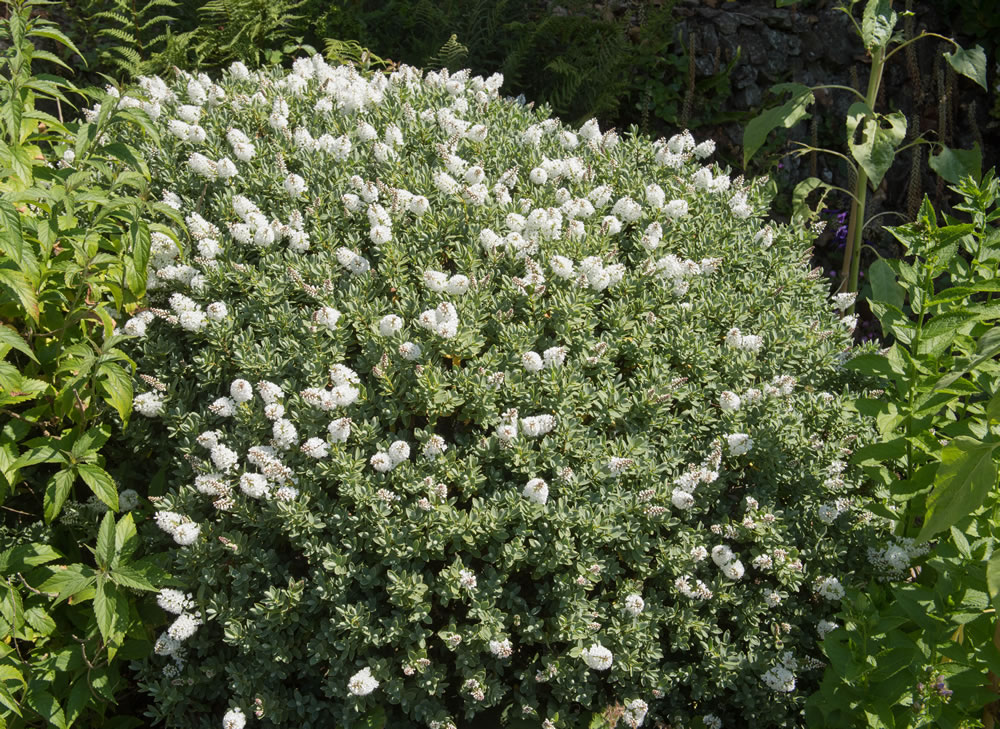
Hebe Albicans is a dense, rounded, evergreen dwarf shrub forming a broad mound with small, glaucous, oblong leaves and short, dense spikes of small white flowers on flowerheads 3–6 centimetres in length in summer. The Latin “albicans” means off-white, referring to the colour of the flowers. Hebe Albicans grows well in poor to moderately fertile soil in sun or partials shade with protection from cold, drying winds.
Hebe Albicans
Hebe Topiaria
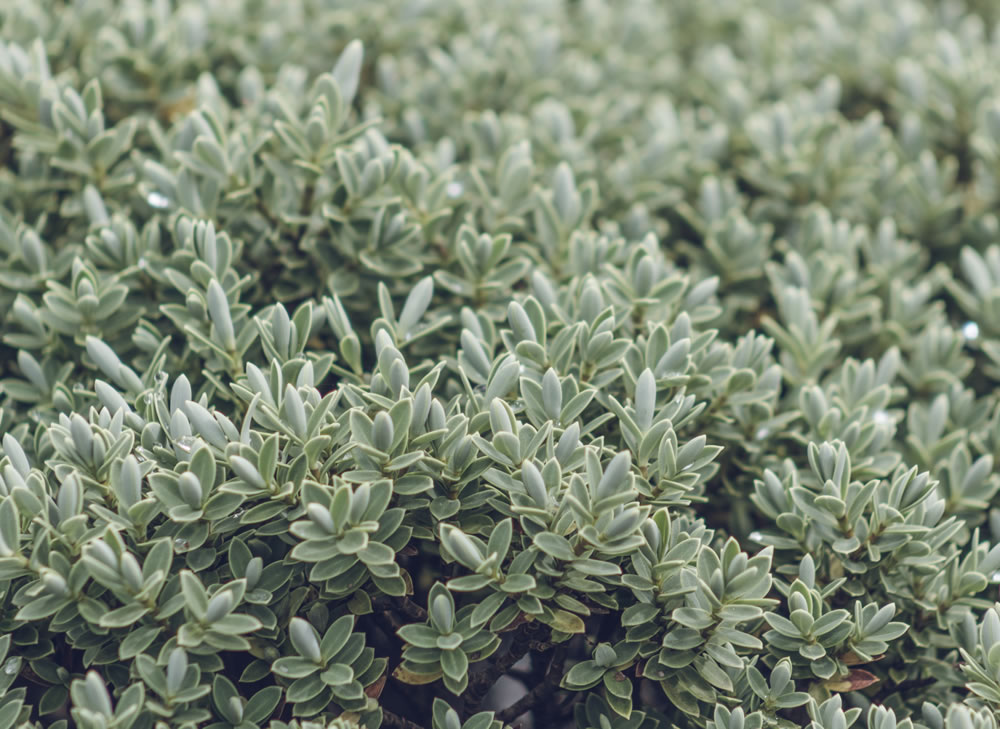
Hebe Topiaria, the topiarist’s hebe, is a very compact evergreen shrub of dense, neat growth, featuring small grey-green leaves with white flowers which appear in dense, short racemes in early to mid-summer. Hebe Topiaria grows well in poor to moderately fertile soil, in sun or partial shade.
Hebe Topiaria
EN Coxhead Hebes
EN Coxhead supplies numerous species of hebe in 2 litre pots, including: Hebe Albicans Red Edge, Hebe Baby Marie, Hebe Champagne, Hebe Green Globe, Hebe Lady Anne, Hebe Mrs Winder, Hebe Pageii, Hebe Sapphire, Hebe Variegata, Hebe Veronicosa, and of course Hebe Albicans and Hebe Toparia.